
Gorilla Trekking Safaris in Uganda

Gorilla trekking in Uganda: where to trek in Bwindi and Mgahinga, permit costs, best time to go and what to pack.
Gorilla trekking in Uganda is one of the few travel experiences that lives up to its reputation. You hike into misty forest with a ranger and trackers, find a habituated family, and spend an hour close enough to watch infants play and a silverback keep watch. Uganda is one of only three countries where it can happen, and it is the one that combines gorillas with the widest range of other safari experiences.
This guide to gorilla trekking in Uganda covers where to trek, how permits work, when to go, what to wear and how to build a wider safari around your trek. The Uganda Wildlife Authority (UWA) sets permit rates and rules and can revise them, so we confirm the current position when we plan your dates.
In this guide
Why choose gorilla trekking in Uganda
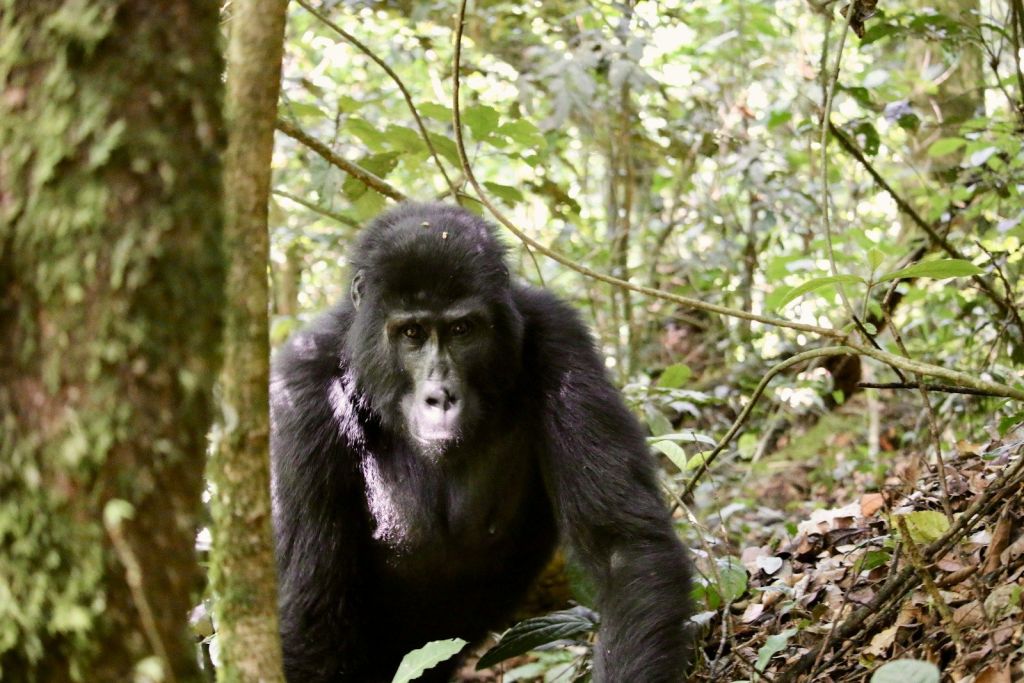
Mountain gorillas live only in the Virunga volcanoes, which Uganda shares with Rwanda and the Democratic Republic of the Congo, and in Uganda’s Bwindi Impenetrable National Park. Just over 1,000 survive in the wild. Bwindi held about 460 at the last census in 2018, which is close to half the world’s total, and the park has been a UNESCO World Heritage Site since 1994.
Uganda offers more than one way in. You can trek in four different sectors of Bwindi or in Mgahinga Gorilla National Park, and you can choose a longer habituation experience that is available only in Uganda. Permits also cost less than in Rwanda, where they are currently $1,500.
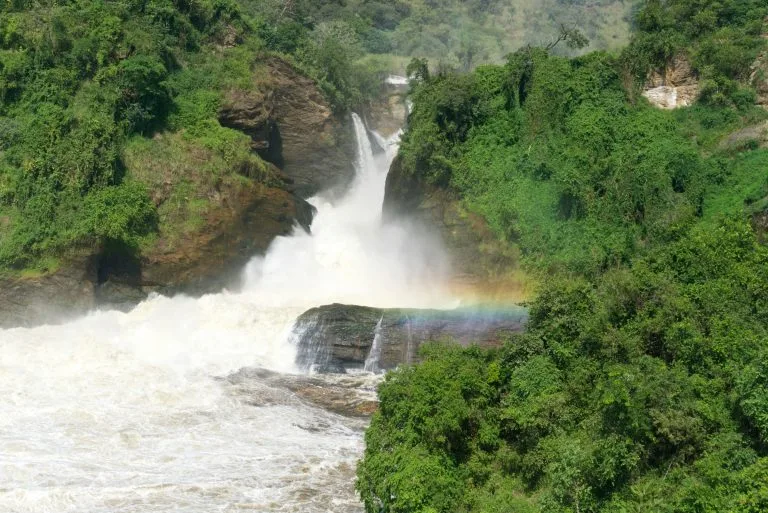
The country rewards a longer trip, too. Chimpanzee tracking in Kibale, tree-climbing lions in Queen Elizabeth National Park and the Nile at Murchison Falls sit within a few days’ travel of the forests, so a gorilla trek can anchor a full Uganda safari rather than stand alone.
Where to go gorilla trekking in Uganda: Bwindi and Mgahinga
Most gorilla treks in Uganda start in Bwindi Impenetrable National Park, in the south-west. The park has four trekking sectors, each with its own gorilla families, lodges and character. The number of habituated families changes as groups split, join or are newly habituated, so we confirm which families are available for your dates.
Buhoma
Buhoma, in the north of the park, is the longest-established sector. Terrain is varied, but it is generally the gentlest of the four, which makes it a sensible first choice if you are unsure about your fitness. Two of the lodges on our site, Buhoma Lodge and Sanctuary Gorilla Forest Camp, are in this area.
Ruhija
Ruhija lies in the east of the park at higher elevation, around 2,350 metres. Operators describe treks here as challenging, with steeper, cooler and often muddier ground.
Rushaga
Rushaga, in the south, has the largest number of gorilla families, and it is the only sector that offers the habituation experience. Terrain varies from family to family. It is also the easiest sector to reach from Rwanda, as the drive from Kigali takes around four to five hours.
Nkuringo
Nkuringo, also in the south, is the most physically demanding sector, with steep slopes and long climbs. It rewards the effort with sweeping views over the forest. Ask us about it if you are fit and enjoy a harder hike.
Mgahinga Gorilla National Park
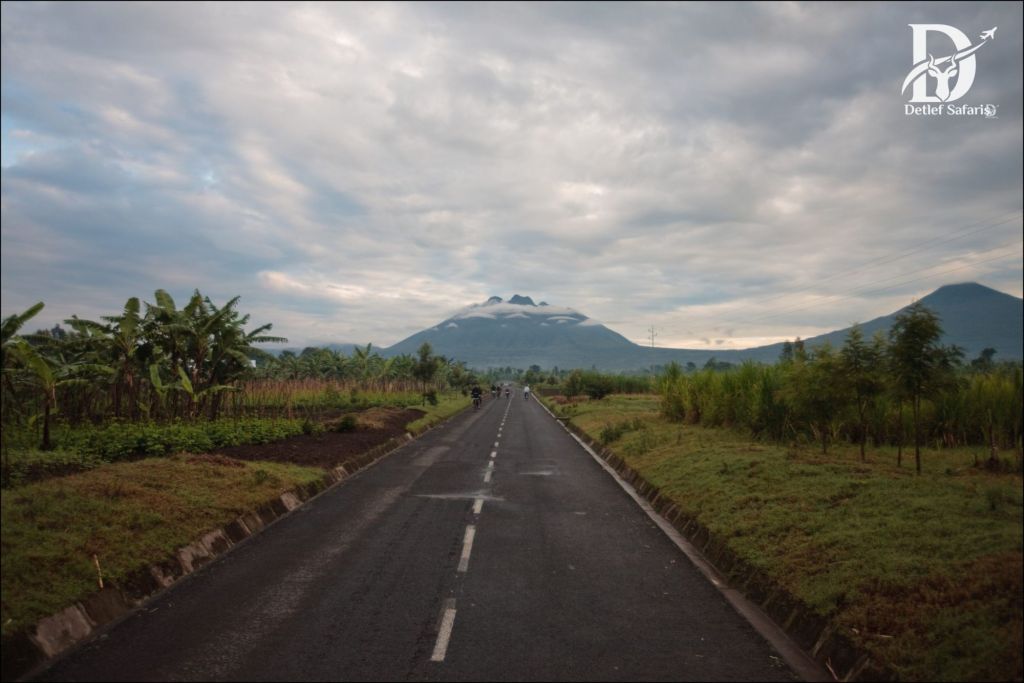
Uganda’s smallest national park, Mgahinga Gorilla National Park, sits on the slopes of three Virunga volcanoes near the Rwandan border. It has one habituated gorilla group, the Nyakagezi group, which sometimes moves across borders, so sightings here are less predictable than in Bwindi. The same park offers golden monkey tracking and volcano hikes, and Mount Gahinga Lodge is a comfortable base nearby.
What a gorilla trekking day in Uganda looks like
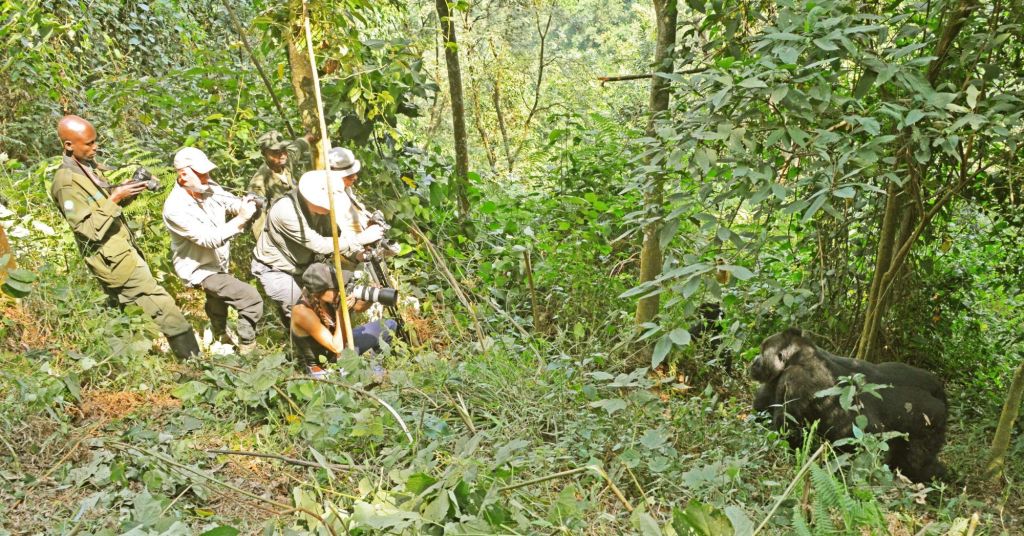
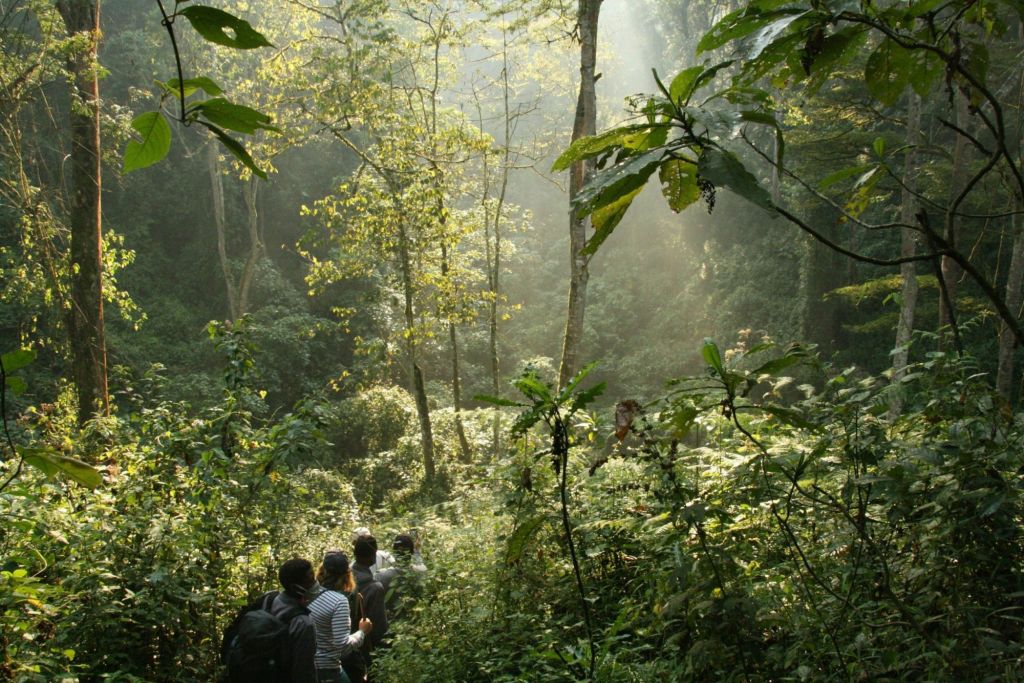
Treks begin early with a briefing at the park or sector headquarters. Rangers explain the rules, assign you to a gorilla family and match you with a group of no more than eight visitors. Trackers set out ahead of the group to locate the family, so your hike starts from the family’s last known position.
Hikes can last from under an hour to most of the day, depending on where the gorillas have moved. Your ranger leads the way, and porters can carry your bag and help you over steep sections. When you find the family, you spend one hour with them at a respectful distance.
We cannot guarantee sightings, but trackers locate the groups on the great majority of treks. The hour passes quickly, so it helps to keep your camera ready and to spend part of it simply watching.
The gorilla habituation experience
The habituation experience is the longer option. Instead of one hour, visitors can spend up to four hours with a gorilla family that rangers and researchers are still accustoming to people. It takes place in Bwindi’s Rushaga sector. UWA issues only a small number of permits each day. It suits travellers who want more time and do not mind a longer day in the forest.
The habituation permit costs $1,500 now. Two operators report that UWA will raise it to $1,800 for foreign non-residents from 1 January 2027, so it is worth booking early if you want the lower rate. Our 5-day itinerary with gorilla habituation builds this experience into a wider trip.
Gorilla trekking permit costs in Uganda and how to book
A gorilla trekking permit is the main cost of the trip, and you need one for every person who is trekking. The rates below are for foreign non-resident visitors and are the rates licensed Ugandan operators publish for the 2026–27 period. UWA sets the tariff, so we confirm the figures when we quote.
| Permit | Rate (per person) | Notes |
|---|---|---|
| Gorilla trekking, standard | $800 | Applies outside the low season. |
| Gorilla trekking, low season | $600 | April, May and November. You cannot reschedule these permits. |
| Gorilla habituation experience | $1,500 | Up to four hours, in Rushaga. Reported to rise to $1,800 from 1 January 2027. |
Lower rates exist for East African residents. Foreign visitors normally book through a licensed Ugandan operator, who secures the permit with UWA on your behalf. Operators report that provisional holds ended in March 2026, so permits now generally need full payment at the time of booking.
Permits for the busiest months sell out. As a rule of thumb, plan to book several months ahead, and earlier for peak months, Christmas and Rushaga habituation slots. Refund and transfer terms are strict, so we explain them before you pay.
Best time for gorilla trekking in Uganda
You can trek year-round. The drier months, roughly December to early February and June to September, usually make for easier walking, because the trails are less muddy. April, May and November are the wetter months, which is why UWA offers cheaper low-season permits. If you are happy with some rain and mud, the low season can be good value.
Our guide to the best time to visit Uganda explains how the seasons affect the rest of your safari.
What to wear for gorilla trekking in Uganda
The forest is steep, damp and often muddy, so dress for the terrain rather than the weather forecast.
- Waterproof hiking boots with good grip, already broken in.
- Long trousers, tucked into your socks to keep ants and nettles out.
- A long-sleeved top in a neutral colour.
- Gloves for gripping vegetation, and gaiters if you have them.
- A light rain jacket, since showers arrive in any month.
- A small daypack with water, snacks and spare surgical masks.
Hiring a porter is worth it. It helps you, and it supports a local family. We can arrange this for you.
Rules, age limit and health
You must be at least 15 to trek with gorillas, and rangers enforce the age limit. Gorillas share most of their DNA with us and can catch our illnesses, so the rules are there to protect them.
- Do not trek if you have a cough, cold, fever or stomach upset. Tell your ranger if you are unwell.
- Wear a surgical mask when you are near the gorillas. Rangers will tell you when.
- Stay at least 10 metres away, even if the gorillas approach you.
- Do not eat, drink or smoke near the gorillas, and do not use flash photography.
- Keep your voice low and move slowly, and follow your ranger at all times.
Building a safari around gorilla trekking in Uganda
Many travellers pair gorillas with chimpanzees in Kibale Forest, then add wildlife drives in Queen Elizabeth National Park or Murchison Falls National Park. Some sample routes:
- 3 days Bwindi gorilla safari, for a short, focused trek.
- 4 days Bwindi gorilla trekking safari, with more time on the road.
- 4 days Uganda gorilla and golden monkey safari, combining Bwindi with Mgahinga.
- 6 days gorillas, chimpanzee habituation and wildlife, for primates plus game drives.
For a longer trip, our 10 days Uganda primate safari and 8 days Uganda safari give you more time on the ground, and hikers can add the Rwenzori Mountains. You can browse every route on our Uganda safari itineraries page.
If you are weighing Uganda against Rwanda, our Rwanda safaris page shows how the experience differs. Rwanda’s Volcanoes National Park is closer to Kigali and its lodges are further from the forest than in Bwindi, while Uganda gives you more choice of sectors and more to add on.
Common questions
How hard is gorilla trekking in Uganda?
It depends on the sector and the family. Some treks are under an hour on gentle ground, while others involve steep, muddy climbs for several hours. Tell us how fit you are and we match you with a suitable sector. Porters and walking sticks make it more comfortable.
Will I definitely see gorillas?
Trackers find the families on the large majority of treks, but we cannot guarantee sightings of wild animals. Rangers know where trackers found each family the day before, and they follow the trail from there.
How long do I get with the gorillas?
One hour on a standard trek. The habituation experience allows up to four.
Can children go gorilla trekking?
No. The minimum age is 15, and rangers enforce it. Younger children can enjoy other activities, so we plan something suitable for them.
What happens if I fall sick before my trek?
Rangers will not let you trek if you show signs of illness. Refund terms are limited and depend on the permit type, which is why we advise travel insurance and explain the terms before you book.
Should I trek in Uganda or Rwanda?
Both are excellent. Uganda offers lower permit prices, more sectors, habituation and many other safari activities, while Rwanda is quicker to reach from Kigali. Many travellers combine them, and our Rwanda safari itineraries show how a trek there fits into a wider trip.
Detlef Safaris plans gorilla trekking safaris across Uganda and Rwanda, with permits, lodges, transfers and wildlife extensions arranged around your dates and fitness. Tell us when you want to travel and how many of you are trekking, and we will propose a sector, a lodge and an itinerary, and confirm current permit rates before you commit.
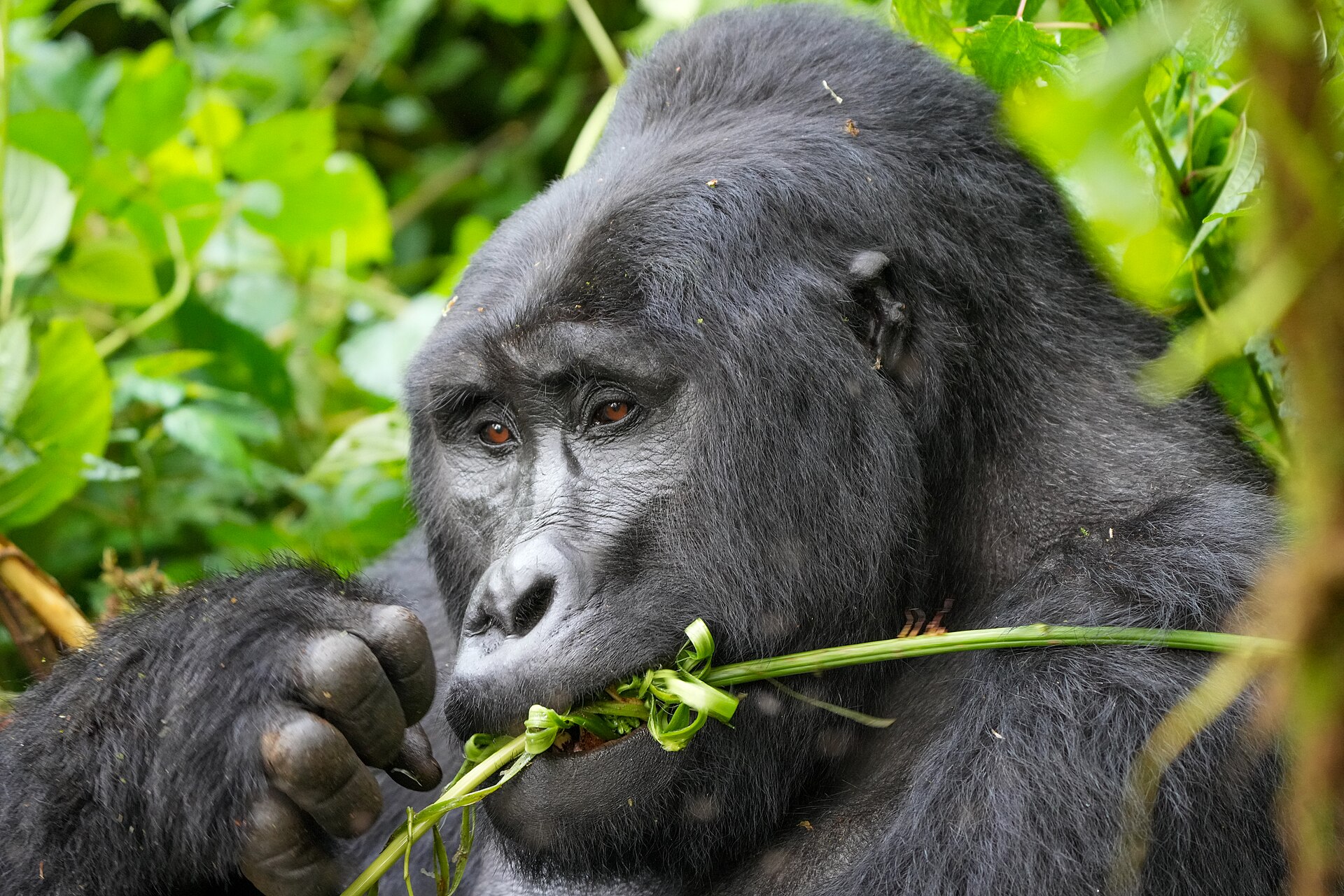
Header photo: Silverback mountain gorilla in Bwindi by Giles Laurent, licensed CC BY-SA 4.0, via Wikimedia Commons.
Plan it with people who know the ground
Our team lives and works in East Africa. Tell us when you hope to travel and what you most want to see, and we will suggest the best route, season and lodges for you.