
Chimpanzee Trekking in Kibale National Park: A Complete Guide

How chimpanzee trekking in Kibale National Park works: permits, costs, age limits, the Habituation Experience, what to bring and when to go.
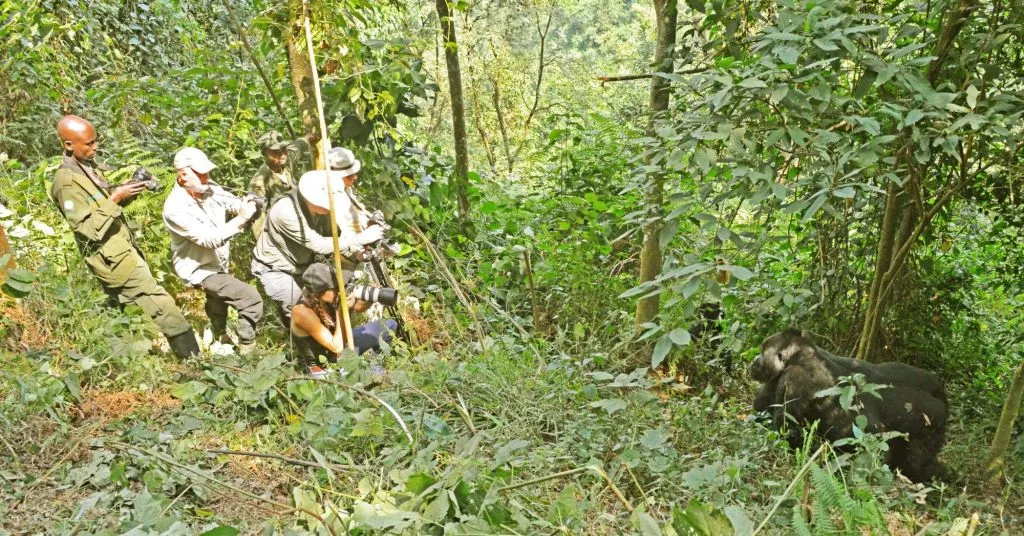
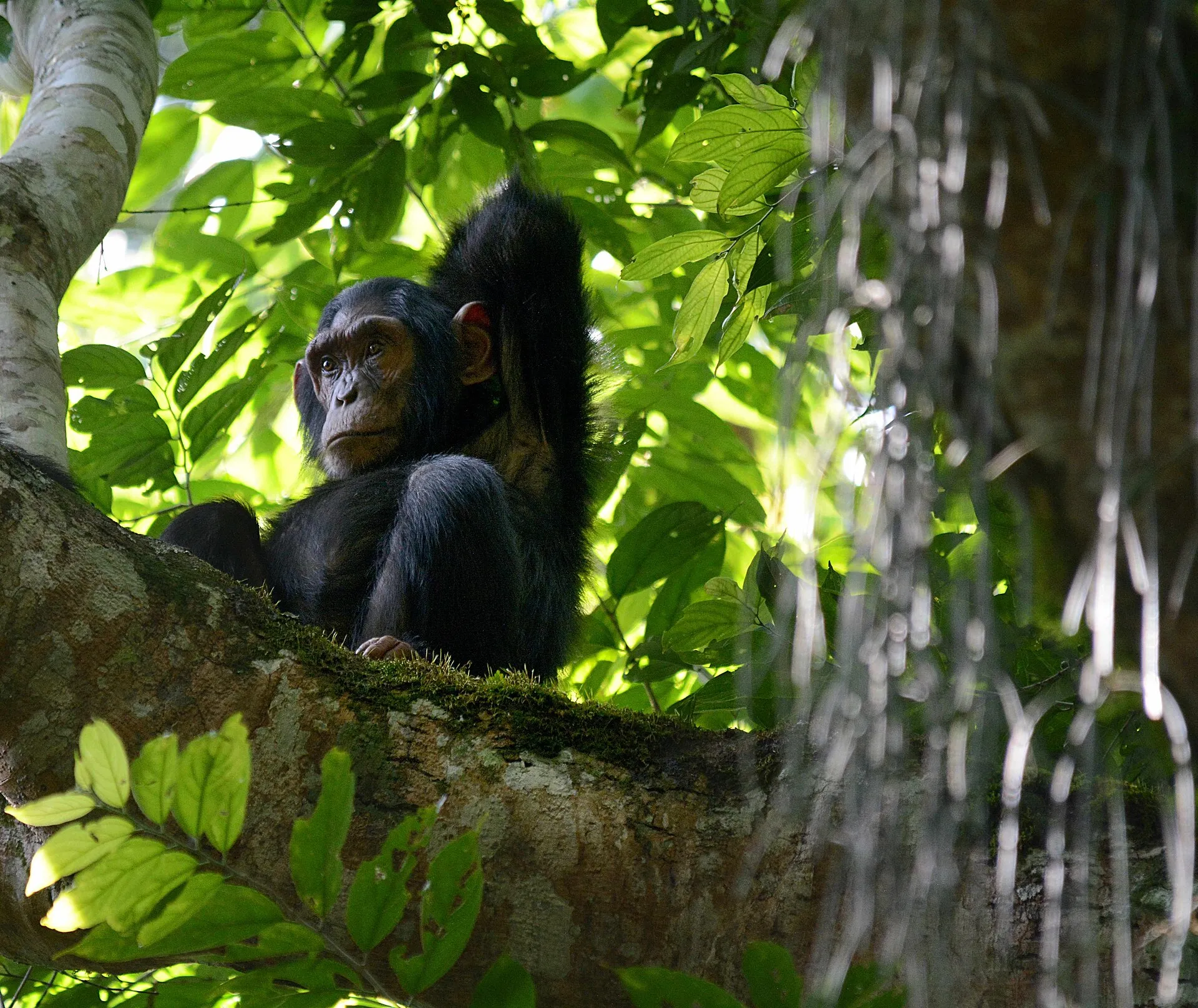
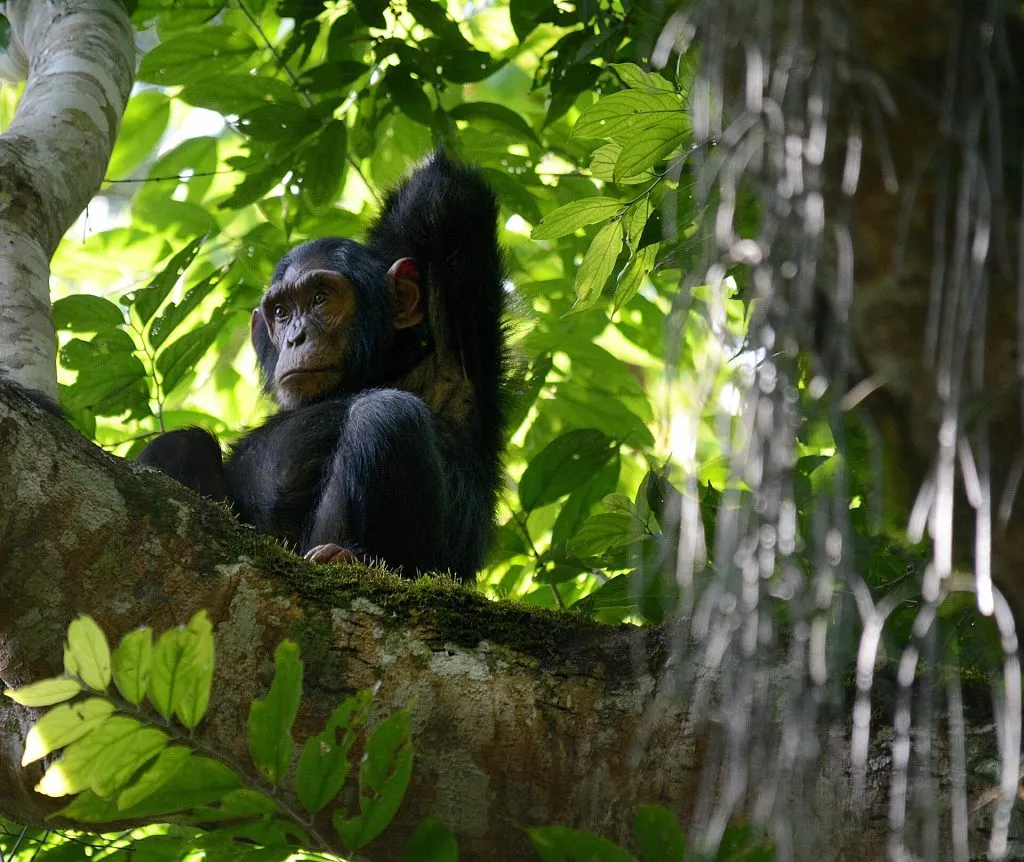
Few wildlife encounters feel as personal as meeting chimpanzees in the wild. You hear them before you see them: a rising chorus of pant-hoots, then drumming on the buttress roots of a forest giant. Moments later, a family moves through the trees above you, feeding, grooming and calling to each other. In fact, chimpanzee trekking in Kibale National Park puts you right in the middle of that scene.
Kibale National Park in western Uganda is the best place in Africa to have that experience. This guide explains how chimpanzee trekking in Kibale works, what it costs, when to go and how to fit it into a wider Uganda safari.
Why Kibale Is the Best Place to Track Chimpanzees
Kibale Forest National Park protects a large block of tropical rainforest near Fort Portal. According to the Uganda Wildlife Authority, it shelters more than 1,500 chimpanzees in at least twelve communities. That makes it one of the highest concentrations of chimpanzees anywhere.
Several communities are habituated, which means they are used to people. Visitors have tracked chimpanzees from the Kanyanchu area since 1993. As a result, sightings are very reliable, and the Uganda Wildlife Authority reports a success rate of over 90 per cent. Kibale is also home to twelve other primate species, so you see far more than chimps on a single walk.
How Chimpanzee Trekking in Kibale Works
Treks start at the Kanyanchu Visitor Centre with a short briefing from your ranger guide. The Uganda Wildlife Authority lists daily departures at 8:00, 11:00 and 14:00, and groups are kept small, with a maximum of six people.
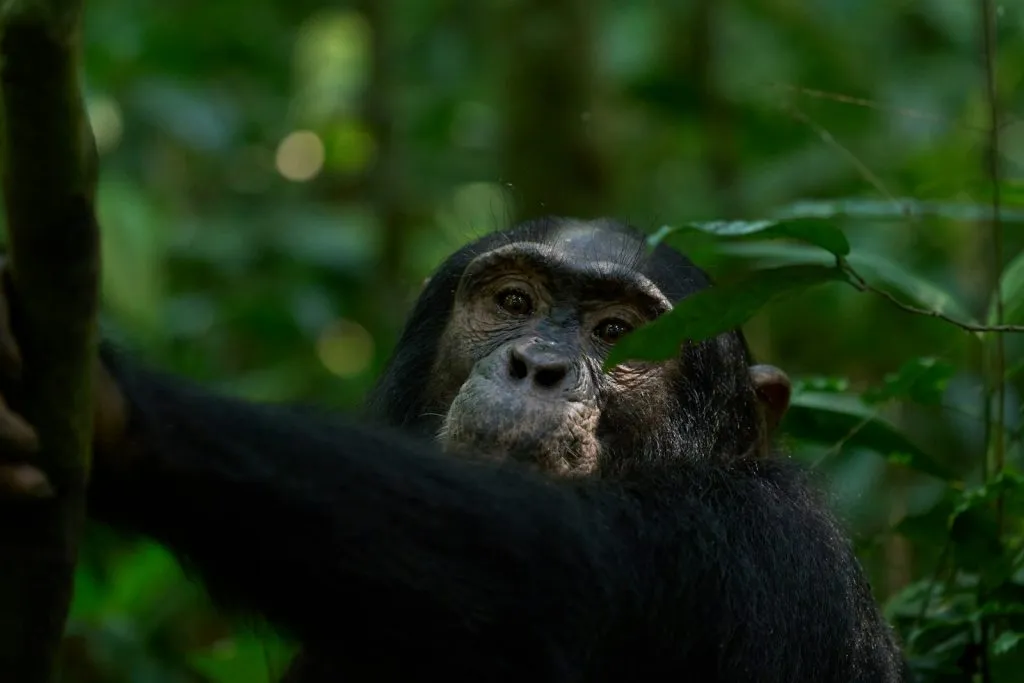
Your guide then leads you along forest trails, listening for calls and checking feeding trees. Trackers often go ahead to find the chimps, so you are rarely walking blind. Depending on where the chimpanzees are, the walk can take two to five hours in total. Once you find them, you spend one hour in their company. Expect to watch them feed, rest, groom and sometimes race down the trunks to move on through the forest.
The Chimpanzee Habituation Experience
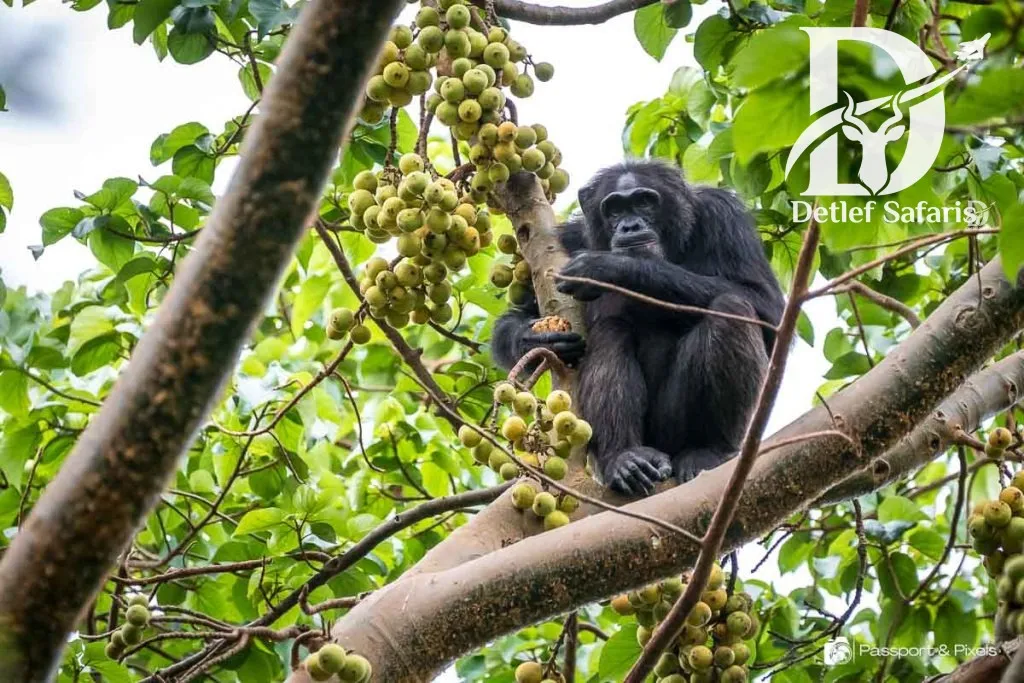
If one hour is not enough, consider the Chimpanzee Habituation Experience. Instead of joining a fully habituated group, you spend most of the day with researchers and rangers following a community that is still getting used to people. You leave early, often in time to see the chimps leave their nests, and stay with them as they travel and feed.
It is a longer and more demanding day, with fewer permits available. However, it gives a much deeper picture of chimpanzee behaviour. We recommend it to keen wildlife photographers and anyone who wants more than a short visit. It features on our 6 Days Uganda Gorillas, Chimpanzee Habituation & Wildlife Safari.
Chimpanzee Trekking in Kibale: Permits, Costs and Age Limits
First of all, every trek needs a permit from the Uganda Wildlife Authority, which publishes its current rates online. A standard chimpanzee tracking permit in Kibale costs $300 per person for 2027. The Habituation Experience costs more, so we confirm the current rate when we quote. Permits are limited each day, so book early for June to September and December to February.
The Uganda Wildlife Authority’s current guidance sets a minimum age of 16 for chimpanzee tracking. Age rules have changed over the years, so we always check the rule for your travel dates. Chimpanzees catch human illnesses easily, so anyone who is unwell may be asked not to trek.
What to Wear for Chimpanzee Trekking in Kibale
Kibale is a rainforest, and showers can come in any month. Wear long trousers tucked into your socks, a long-sleeved shirt and sturdy, waterproof walking boots. In addition, pack a light rain jacket, insect repellent and a small backpack with water and a snack.
Bring binoculars for the monkeys and birds in the canopy. A camera with good low-light performance helps, because the forest floor is shady and flash photography is not allowed. Gloves are useful when you grab vines or branches on steep sections.
More Than Chimpanzees: Other Things to Do Around Kibale
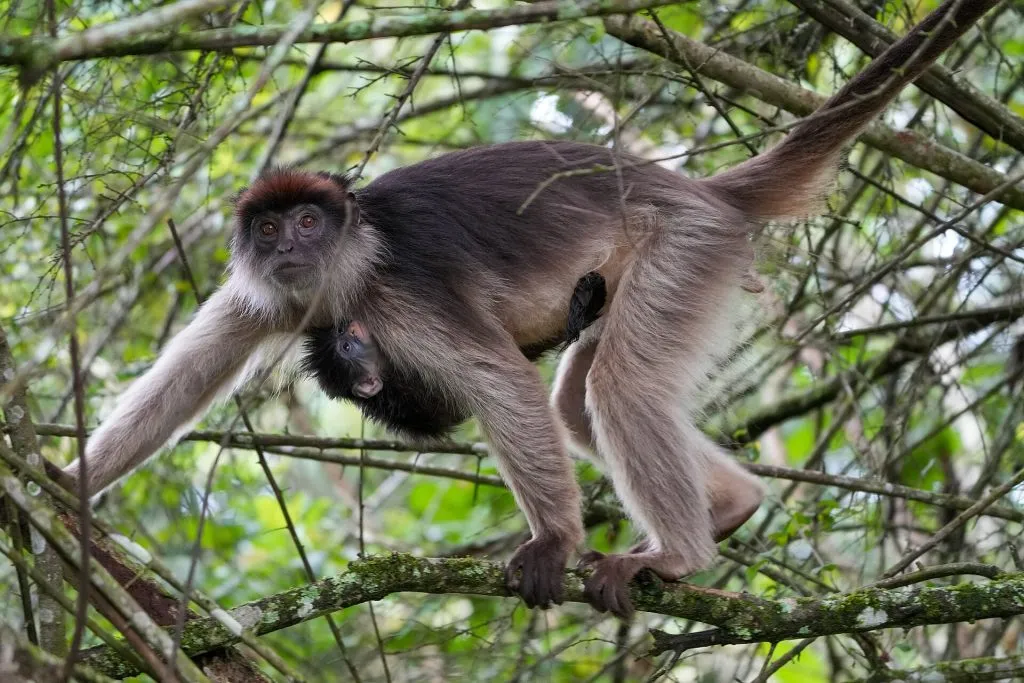
Kibale has thirteen primate species in all. On a single walk you may see red colobus, black-and-white colobus, grey-cheeked mangabeys, blue monkeys and L’Hoest’s monkeys. Guided night walks near the park edge reveal bushbabies and pottos.
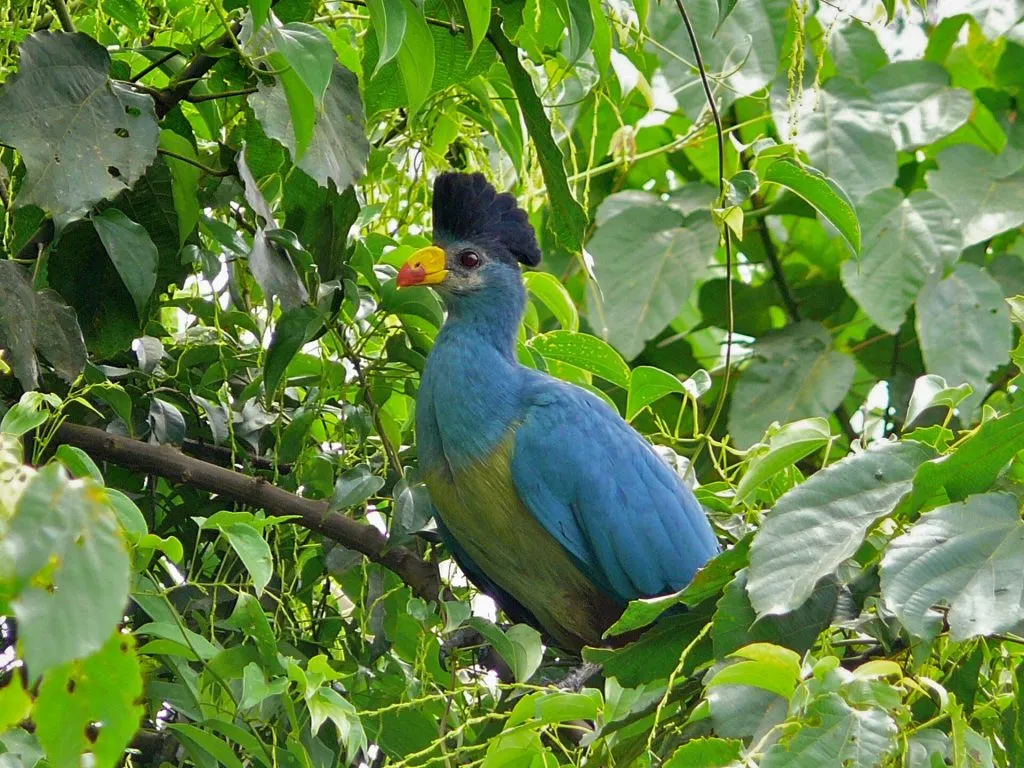
Just outside the park, Bigodi Wetland Sanctuary is a community-run swamp walk that is excellent for birds and monkeys. Look out for the great blue turaco. Afterwards, the crater lakes around Fort Portal are a lovely place to relax. For a stay with a view, Kyaninga Lodge sits on the rim of a crater lake near Fort Portal.
When Is the Best Time to Go?
Chimpanzee trekking in Kibale runs all year, and sightings stay good in every season. The drier months, from June to September and from December to February, give you easier walking and less mud. March to May and October to November are wetter, so the trails are slippery. On the other hand, the forest is lush and there are fewer visitors. Our guide to the best time to visit Uganda explains the seasons in more detail.
Combining Kibale With Gorillas and Savannah
Kibale fits naturally into a western Uganda circuit. It lies between Murchison Falls and Queen Elizabeth National Park, so you can add a game drive and a Kazinga Channel boat trip. Many travellers then continue south to Bwindi Impenetrable Forest to track mountain gorillas. Read our guide to gorilla trekking safaris in Uganda to plan that part of the trip.
For a ready-made route, see our 10 Days Uganda Primate Safari. If you have energy left, the Rwenzori Mountains are close by for a day of hiking. Get in touch, and we will build a chimpanzee trek into a safari that suits you.
Plan it with people who know the ground
Our team lives and works in East Africa. Tell us when you hope to travel and what you most want to see, and we will suggest the best route, season and lodges for you.